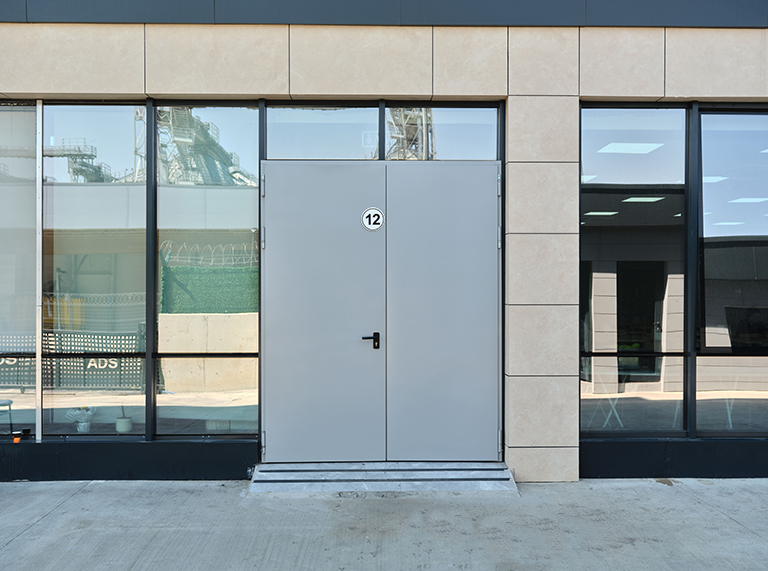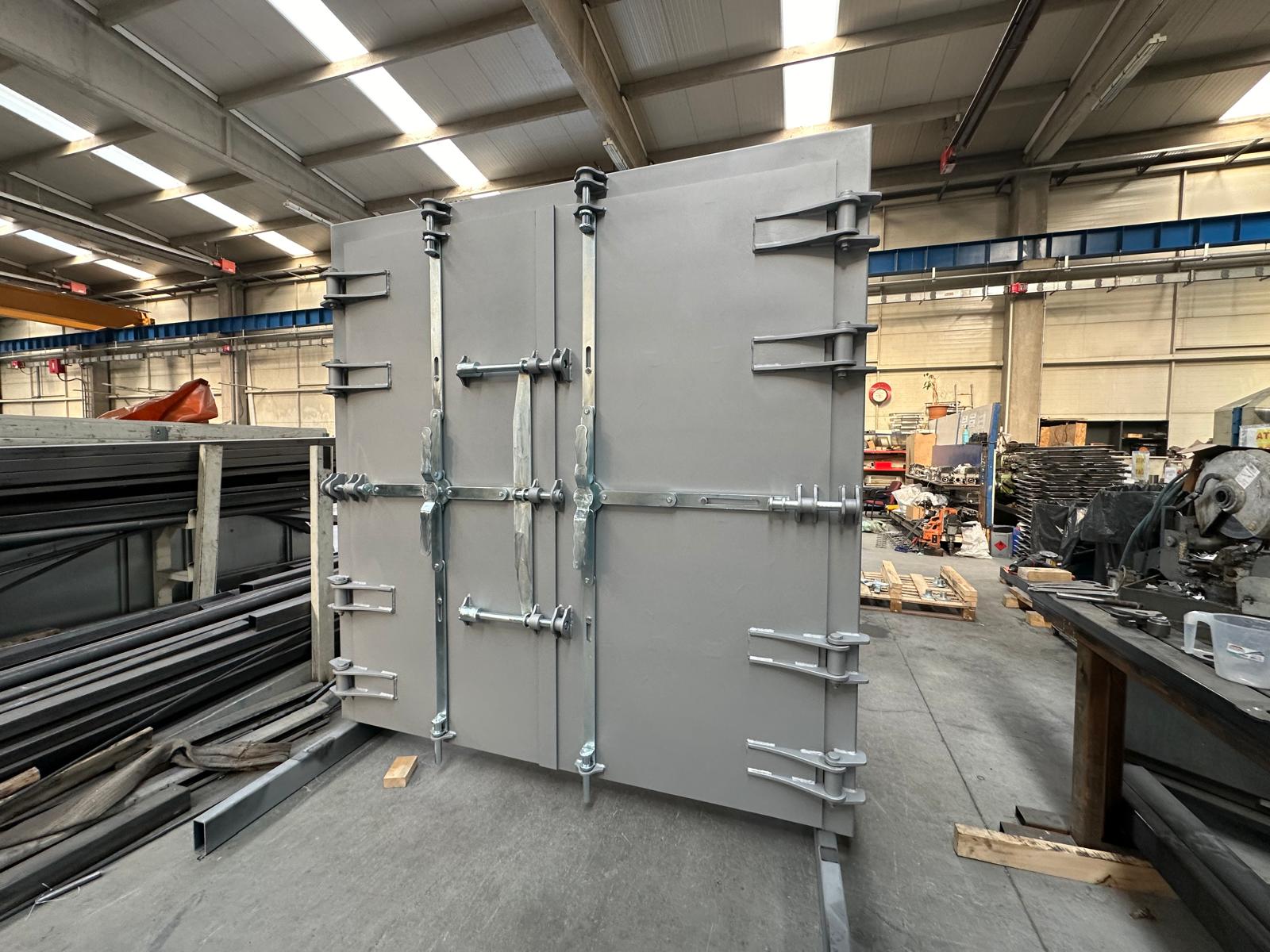
The single most important job of a fire door is to stay closed during a fire, stopping flame and smoke from spreading from one compartment to another. For this to work, the door must close by itself, reliably, after every use. On Dimak fire doors, the component that delivers this closing action is the single-axis spring hinge, which performs the job without requiring a separate door closer. This page explains what a spring hinge is, how it provides self-closing, its technical characteristics and the standard it is assessed against.
A spring hinge is a single-axis hinge that returns the door leaf to the closed position after it has been opened, using a spring mechanism housed inside the hinge body. An ordinary hinge only connects the leaf to the frame and creates the axis of rotation; a spring hinge also generates the closing force. In fire doors this is essential, because the door must close on its own every time, without relying on anyone to push it shut.
The hinge used on Dimak fire doors is a surface-mounted (leaf-to-frame) single-axis spring hinge. It is suitable for both right-hand and left-hand opening doors and can be installed with either a welded or a screwed system. This flexibility lets the hinge be used cleanly across different projects and mounting conditions.
There are two common ways to achieve the self-closing function on a fire door: a spring mechanism integrated into the hinge, or a separate door closer mounted at the top of the door. The standard closing mechanism on Dimak fire doors is the spring hinge. In other words, the door is closed by the hinge itself, with no separate door closer required.
The advantage of this approach is a clean, integrated solution: the closing force is hidden inside the hinge rather than being a visible piece of overhead hardware. Depending on project requirements or the applicable regulation, a door closer can be specified in addition; but in the standard configuration, closing is handled by the spring hinge. This distinction is an important technical point to state correctly when preparing a quotation or specification, particularly for export markets where inspectors may expect a specific self-closing arrangement.
| Characteristic | Value |
|---|---|
| Hinge type | Single-axis spring hinge |
| Application | Fire doors |
| Door direction | Suitable for right and left hand |
| Closing | Self-closing (via internal spring) |
| Max door weight | 80 kg / 100 kg |
| Mounting | Welded or screwed to the leaf-frame surface |
| Harmonized standard | EN 1935:2002 and EN 1935:2002/AC:2003 |
| Dangerous substances | NPD |
The Dimak fire door hinge is assessed under EN 1935:2002 (and its corrigendum EN 1935:2002/AC:2003), the harmonized standard for single-axis building hardware hinges. This standard defines the hinge’s performance in terms of safety and durability. The key performance criteria the Dimak hinge meets are:
The hinge’s compliance under EN 1935 is a separate standard from the EN 1634-1 fire resistance test, which assesses the door assembly as a whole. The hinge works as part of a certified fire door system, and the door’s overall fire resistance class is determined by the certification of the complete door assembly. We explain what a fire resistant door is and how it performs in a dedicated guide.
The spring hinge can be mounted to the leaf-frame surface with either a welded or a screwed system. It offers a robust yet neat appearance and is straightforward to install. For the hinge to work correctly and for the door to perform as expected, keep the following in mind:
Moving hardware such as hinges needs regular inspection to maintain performance over time. To keep the fire door’s self-closing function reliable, do not neglect periodic maintenance and inspections.
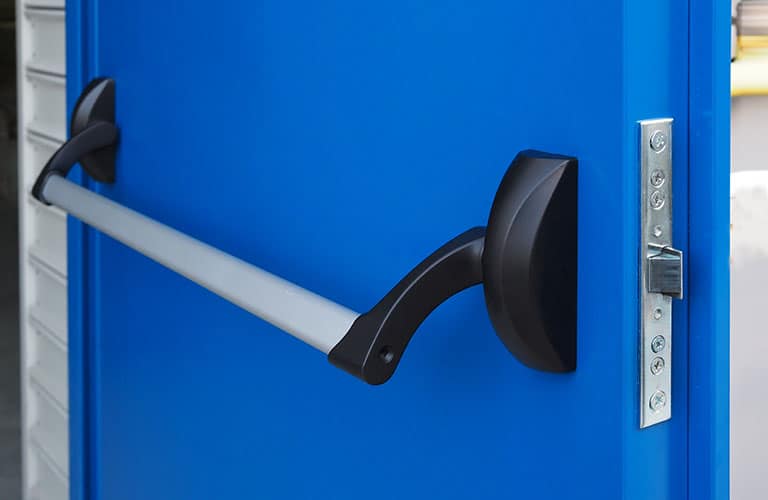
The spring hinge is one of several hardware components that make up a fire door. Safe operation depends on the hinge, lock, panic bar, seal and other hardware all working together as a system. While the hinge handles closing, where emergency egress is required the single leaf panic hardware fire door and double leaf panic hardware fire door solutions enable fast, safe evacuation.
To understand how a fire door works and what its other components are, see our what is a fire door guide, or view all the door’s hardware and accessories together on our fire door hardware page.
Dimak fire doors use a single-axis spring hinge. A spring inside the hinge closes the door by itself after every use, and the hinge complies with EN 1935:2002.
Yes. The Dimak spring hinge returns the door to the closed position using the spring mechanism inside the hinge body, without needing a separate door closer.
The Dimak spring hinge is suitable for a maximum door weight of 80 kg / 100 kg.
Yes. The single-axis spring hinge is suitable for both right-hand and left-hand opening fire doors.
The hinge is mounted to the leaf-frame surface with a welded or screwed system. After the spring is installed, opening the door up to 120 degrees is recommended; for wider opening, a stop should be placed behind the leaf.
Looking for a certified fire door for your project? The Dimak Door team supports you on every technical detail, including the correct hinge and hardware configuration. Get in touch and request a quote tailored to your project.