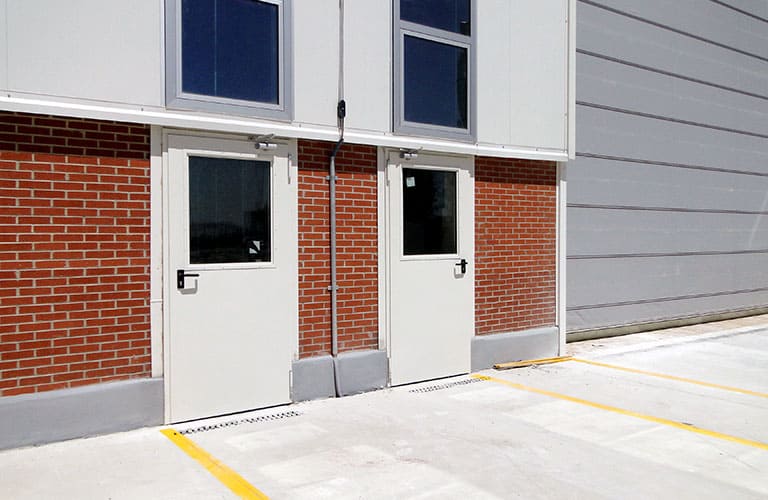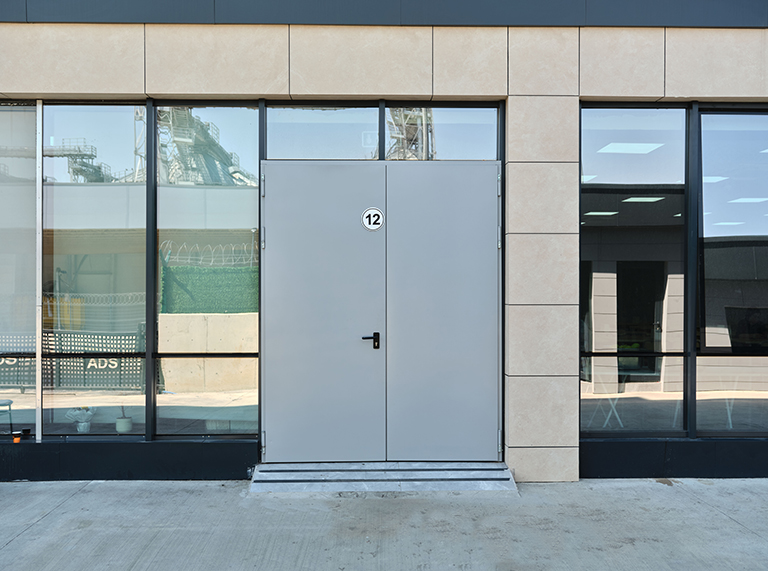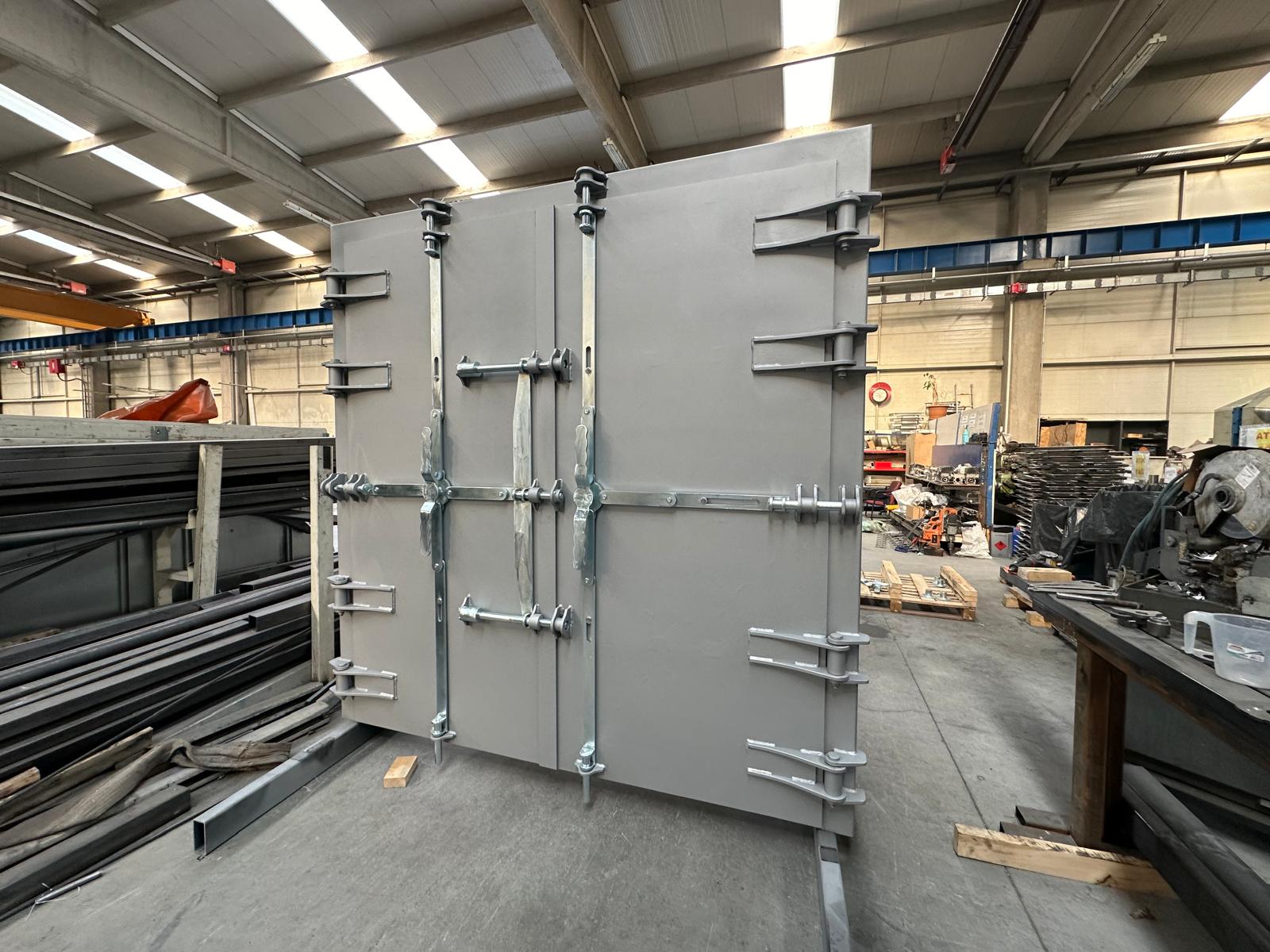


A fire door is not a single part but a system of hardware working together. For the door to do its job during a fire, the leaf and frame plus the hinge, lock, panic bar, seal, threshold and every other accessory must all work in harmony. Each component carries out a specific task so the door self-closes, seals and operates safely. On this page you will find all the hardware and accessories that make up a Dimak fire door, what each component does, and its technical documents.
Each item works as part of the whole. The door’s overall fire resistance performance and certification are determined by testing the complete system together. If you want to understand how the door works, start with our what is a fire door guide, and see fire door features for the key performance characteristics.
Closing
A single-axis hinge that self-closes the door after every use. The spring inside the hinge provides the closing action without needing a separate door closer.
Closing
Standard closing is provided by the spring hinge; a door closer can also be specified depending on project requirements.
Protection
A stop that prevents the door from over-opening, protecting the hinge and the door.
Locking system
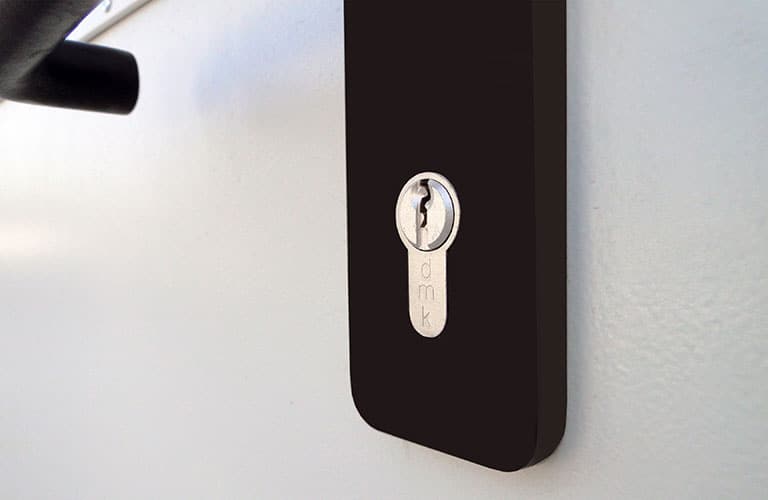
A reversible mortise lock that keeps the door closed, a Euro-profile cylinder for keyed access, and an electrical strike for card entry and remote release integration.
Locking
The bolt hardware that locks the fixed leaf on double-leaf doors.
Lever hardware
The core hardware for opening and closing the door in daily use.
Lever hardware
A round opening option that can be chosen instead of a lever handle.
Lever hardware
A long handle that improves ergonomics, especially on the pull side.
Lever hardware
A plate that protects the surface and eases operation on high-traffic doors.
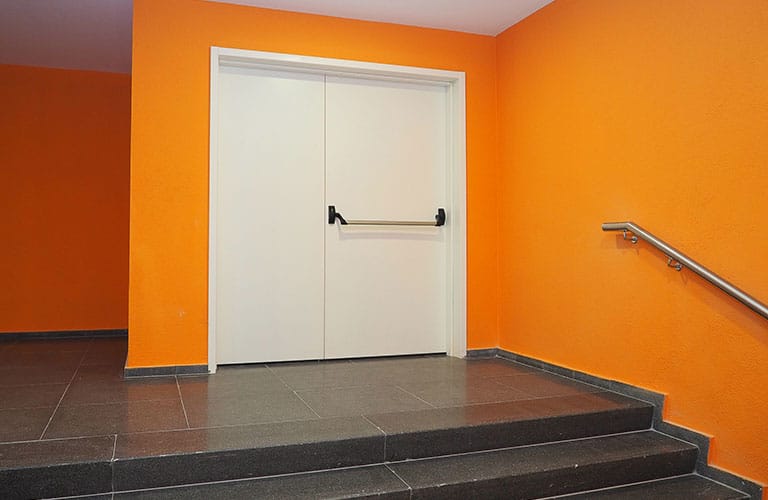
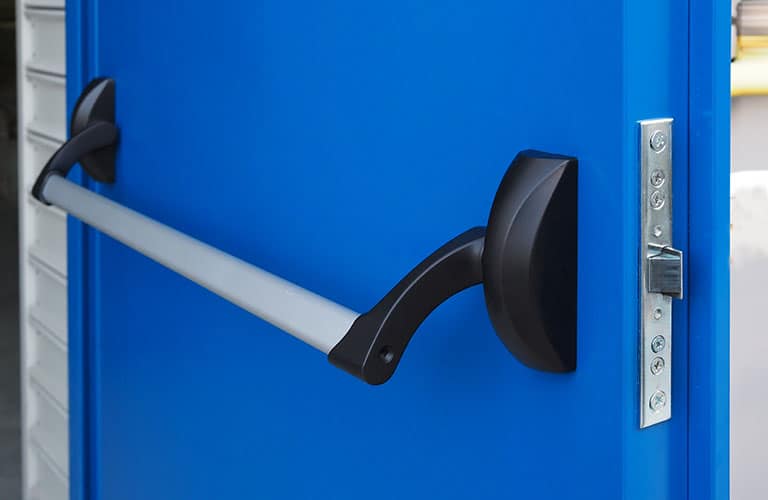
A panic bar (emergency exit device) lets people open the door from the inside in a single push, in the direction of egress, in occupied areas. For frame options, see the full frame fire door page.
Emergency exit
Fast, safe evacuation on single-leaf doors with a panic bar.
Emergency exit
Wide passage and emergency evacuation on double-leaf doors with a panic bar.
Sealing
Closes the gap between door and frame to support smoke and air tightness.
Protection
A durable, hygienic stainless steel threshold that closes the gap under the door.
Protection
Hardware that provides electrical continuity between the leaf and the frame.
Finish
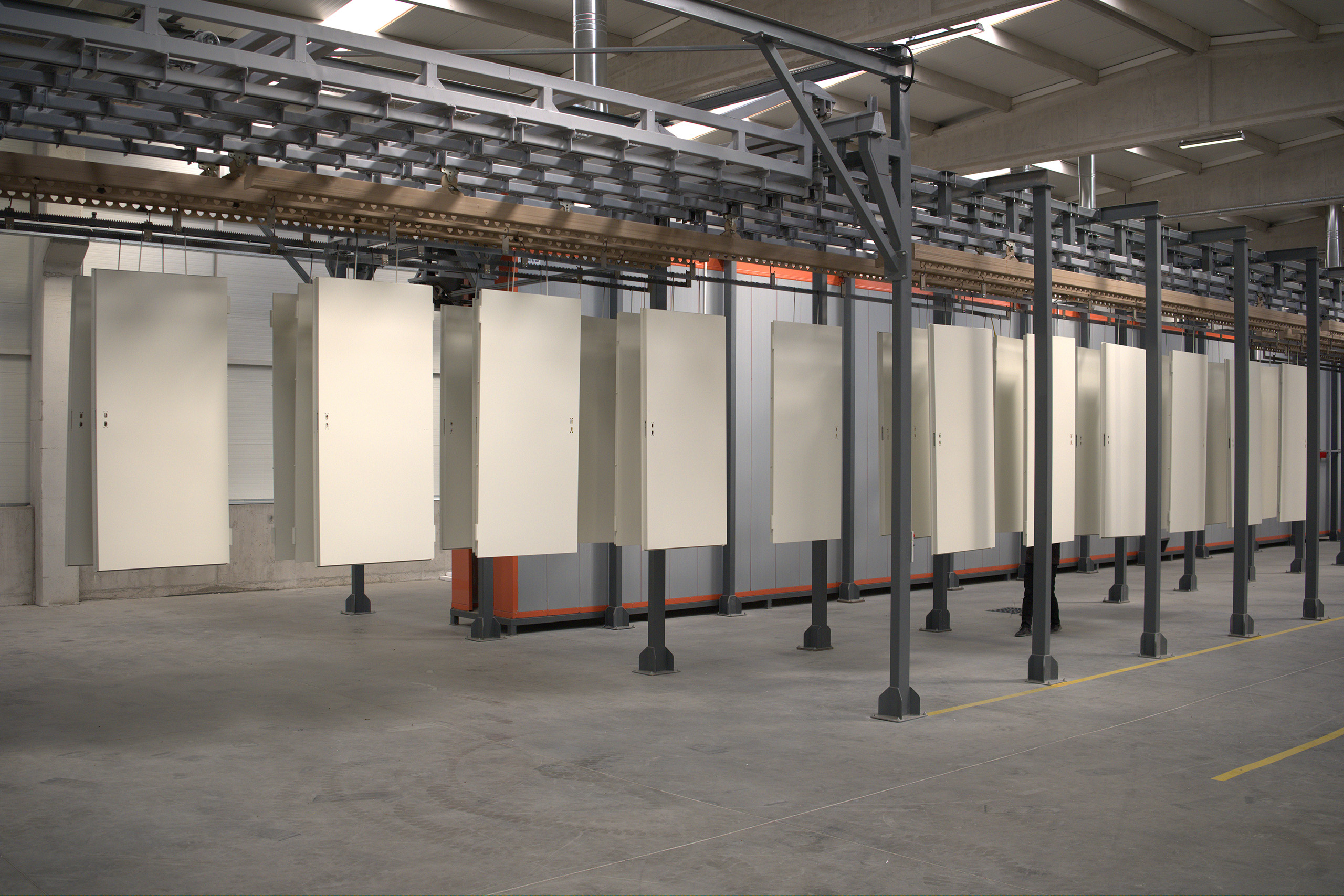
A coating process that gives the door a durable, uniform and long-lasting surface.
Glazing
Fire resistant glazed solutions for locations that need visibility and light.
Dimak fire doors are built on a modular construction principle, so different hardware and accessory combinations can be configured per project. For the installation process see fire door installation, and keep hardware performing reliably with periodic maintenance and inspections.
Construction
A modular production principle that lets hardware and accessory combinations be configured per project.
Accessories
Project-specific optional accessories that can be added alongside the standard hardware.
A fire door consists of hardware such as a spring hinge, lock and cylinder, handle or knob, a panic bar where needed, seal, threshold, earthing strip and stopper. Together these components let the door work as a system.
On Dimak fire doors, self-closing is provided by the spring inside the hinge. In the standard configuration no separate door closer is required; a door closer can be specified additionally depending on project requirements.
Yes. In areas requiring emergency egress, a panic bar (emergency exit device) can be integrated into single-leaf or double-leaf fire doors.
Yes. With an electrical strike, a fire door can be integrated with access control systems such as card entry and remote release.
Let’s determine the right hardware configuration for your project together. The Dimak Door team supports you across every hardware option, from the hinge and panic bar to locking and access control. Get in touch.